

Most people arrive at a dermatology appointment knowing more than their grandparents would have imagined possible. Between condition-specific clinic sites, patient forums, and medical institution pages, the baseline of publicly available information has shifted in ways that have genuinely changed how consultations go. Clinics like https://luminederm.com/ have raised the bar by publishing detailed, plain-language explanations of procedures that patients once only learned about in the exam room. That kind of content has a measurable effect: patients who’ve done solid pre-visit reading tend to ask better questions, process recommendations more quickly, and leave with clearer expectations about recovery.
That shift matters most when the choice involves real trade-offs. Understanding something like partial vs total nail avulsion for infected toenails before an appointment, for instance, changes the conversation from “what is that?” to “which option makes more sense for my situation?” That’s a more productive use of clinic time for everyone. The question worth asking is not just whether to research before seeing a specialist, but how to do it in a way that actually helps.
The Shift Toward Patient-Led Research

Something changed in the mid-2010s when mobile search became the default way people responded to physical symptoms. Before that, most health searches happened after a visit, as a way to understand what a doctor had already explained. Now the order is often reversed. Patients come in with a working theory, a list of questions, and sometimes a specific treatment they’ve read about and want to discuss.
This isn’t always a complication for clinicians. Dermatologists at private practices have noted that prepared patients tend to move through consultations more efficiently. They understand why certain questions need to be asked. They’ve already filtered out the obvious self-treatments that wouldn’t have worked anyway. The research doesn’t replace the appointment; it changes what the appointment needs to accomplish.
The quality of that research varies enormously, which is where the web itself creates new problems alongside its benefits. Not all sources are equal, and patients who arrive with information from low-quality content mills can sometimes be harder to redirect than patients who came in knowing nothing at all. This is the main practical problem with patient-led research: the access to information is consistent, but the quality of that information is not.
What Makes a Medical Website Actually Useful
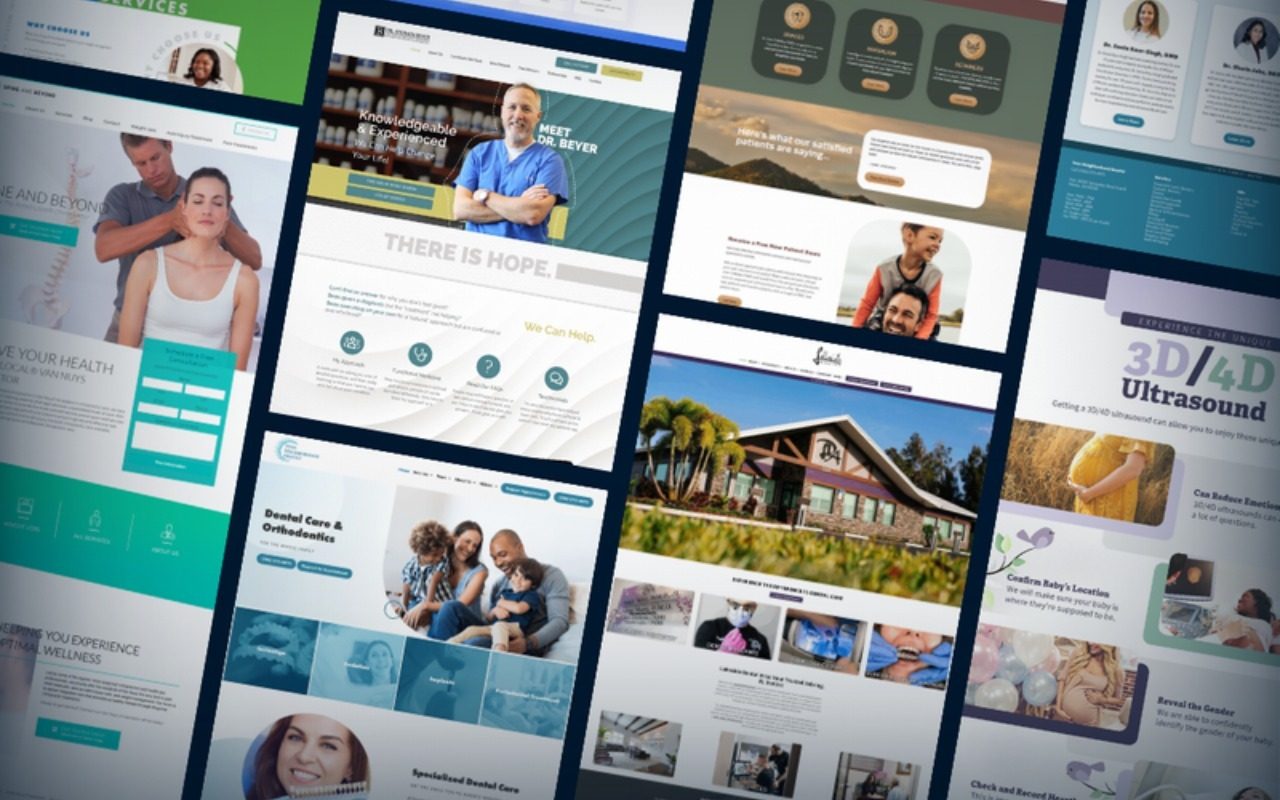
The most reliable health content online tends to come from one of three places: major medical institutions, peer-reviewed summary resources written for general audiences, and specialty clinics whose staff have a professional stake in accuracy. According to the American Academy of Dermatology, patient-facing content is most useful when it explains conditions in terms of what patients will actually experience, not just the clinical description.
Generic health aggregator sites often fail that test. They describe conditions in broad strokes without addressing the specific questions patients actually have, such as whether treatment is done in-office or requires general anesthesia, what recovery looks like day by day, or when a patient can return to normal activity. These gaps are exactly what a procedure-specific clinic page tends to fill well.
The tell for a useful medical website is usually the level of operational detail. A page that tells you how long the healing process takes, what to watch for afterward, and who should consider one option over another is doing something more useful than a page that simply defines the condition and lists symptoms.
Common Toenail Conditions People Research Online

Toenail problems prompt a lot of online searches because they’re visible, persistent, and often embarrassing in a way that makes people reluctant to bring them up unprompted with a primary care doctor. Fungal infections, ingrown nails, and thickened or discolored nails are among the most common dermatological searches, and many people spend months trying home treatments before concluding they need clinical help.
The ingrown nail is particularly well-documented online, in part because the range of severity is wide enough that self-treatment works for mild cases but fails badly for advanced ones. Patients who’ve been soaking a toe for six weeks without improvement are often looking for a clear answer about when the line from “manageable at home” to “needs a procedure” gets crossed.
Nail infections introduce a different layer of complexity. Once bacterial infection is involved, the decision about how much of the nail needs to go becomes more urgent and less something a patient can manage with pharmacy products alone. The National Health Service classifies ingrown toenail surgery as a minor procedure typically performed under local anesthetic, though the specific technique depends on whether the problem is isolated to one side or affects the entire nail matrix.
How to Read Treatment Information Without Getting Overwhelmed

Medical content online has a tendency to branch. One article leads to three more through internal links, each introducing new terminology and new sub-conditions, until a patient who started searching “infected toenail” is three tabs deep into something about peripheral vascular disease. This isn’t always avoidable, but it helps to have a strategy before you start. Deciding in advance what you actually need to know keeps the session from turning into a two-hour rabbit hole.
The most practical approach is to anchor research around the procedure rather than the diagnosis. Once you know you’re looking at a nail avulsion procedure, the relevant questions narrow quickly: local versus general anesthetic, partial versus complete removal, recovery timeline, likelihood of recurrence. These are bounded questions with bounded answers, and most credible procedure pages cover them directly.
Reading patient accounts alongside clinical descriptions also helps, not because patient accounts are more accurate, but because they often surface practical details that formal content omits. How long did the anesthetic injection hurt? Can you drive yourself home afterward? These operational questions rarely make it into clinical procedure descriptions, but they’re often what patients actually need answered before they’re ready to book an appointment.
Knowing When to Move from Research to an Appointment

The purpose of pre-appointment research is not to make the appointment optional. At some point, online information runs up against its own limits. It can describe what typically happens, but it can’t assess the specific condition of a particular toe on a particular person on a particular day. That’s still what the clinic visit is for, and no amount of reading changes that.
A useful personal heuristic: if the condition has been present and unchanged for more than three weeks, or if it’s been visibly worsening despite home treatment, the research phase should probably be over. The same applies if there’s any sign of spreading redness, warmth, or discharge. These are indicators that the situation is moving faster than a reading list can keep up with.
Good pre-appointment research ends with a short list of questions, not a self-diagnosis. The goal is to arrive informed enough to have a productive conversation, understand what the clinician recommends, and make a decision from a position of basic familiarity with the options. That’s a realistic and genuinely useful thing the web can help with, and it’s worth taking seriously rather than treating it as just passive browsing.